
"Fibre" has moved from the back of the cereal box to the front of almost every snack in the supermarket. For decades it was the dull nutrient of bran and supplements. In 2026 it is one of the most valuable words a brand can put on a packet, and that is worth understanding before you buy.
This isn't about the biology of fibre (that's a separate story). It's about why brands are suddenly so keen to talk about it, and how to read past the claim to the product underneath.
Why brands discovered fibre
The trigger is a genuine gap. The UK recommends 30g of fibre a day; the average adult gets about 18g. Shoppers have started to notice, and a real shortfall is a marketing opportunity. A "High Fibre" flash turns an ordinary snack into a "solution" to a problem people already feel guilty about.
The three label tricks to watch for
The health halo. A cheap industrial fibre such as chicory root or inulin is stirred into a sugary, refined product so it can carry a "High Fibre" claim. The claim is legal; its job is to distract you from the sugar and the long ingredient list beneath it.
The "added" giveaway. If you spot inulin, oligofructose or polydextrose partway down the ingredients, the fibre was poured in, not grown in. When fibre comes from the food itself, the first ingredient is simply a whole grain or a pulse.
The fullness pitch. Fibre is sold as "keeps you fuller for longer," which is fair, until it's bolted onto a refined white-flour base whose rapid sugar release cancels the effect out. The claim survives; the benefit doesn't.
Three questions that cut through it
Is the fibre added or intrinsic? Check whether it comes from the main ingredient or from a powder listed separately.
What's the sugar-to-fibre ratio? A bar with 6g of fibre and 15g of sugar is a sweet treat wearing a health badge.
Is it an ingredient or a product? You'll never see a "High Fibre" sticker on a bag of chickpeas. It doesn't need one. The louder the claim, the more worth asking why.
The quiet tell
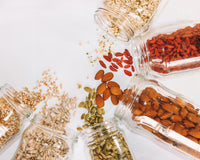
Here's the pattern once you see it: the foods that shout about fibre are usually the ones that have the least else going for them. The staples that are genuinely rich in it, the lentils, grains and seeds that have been so since long before marketing existed, stay silent on the shelf. They don't need a flash on the front, because everyone already knows what a lentil is.
So the simplest defence against fibre marketing is to stop shopping for the claim and start shopping for the ingredient.
Skip the claims and buy the real thing: shop our naturally fibre-rich staples.