
Adopter simultanément un régime végétalien et un régime cétogène peut ressembler à un exercice d'équilibriste. Le régime cétogène exige de maintenir les glucides à un niveau bas et les protéines à un niveau stable, tandis qu'un régime à base de plantes exclut la viande, les œufs et le lactosérum sur lesquels de nombreuses personnes s'appuient pour leurs apports en protéines. La bonne nouvelle, c'est que les deux peuvent absolument fonctionner ensemble, et une poudre de protéines végétales bien choisie facilite grandement la tâche. L'astuce consiste à savoir quelles poudres sont réellement faibles en glucides et lesquelles ne le sont pas. Voici un guide convivial des poudres de protéines végétaliennes à essayer dans le cadre d'un régime cétogène, et comment les utiliser.
Pourquoi les protéines sont importantes dans un régime cétogène végétalien
Les protéines accomplissent beaucoup de travail en coulisses. Elles aident à se sentir rassasié, soutiennent la réparation et la récupération musculaire, et donnent de la structure à un régime qui pourrait autrement être fortement axé sur les graisses. Dans le cadre d'un régime cétogène végétalien, atteindre son objectif de protéines uniquement à partir d'aliments complets peut être délicat, surtout si l'on retire de la table les légumineuses plus riches en glucides. Une cuillère de poudre de protéines végétales faible en glucides est un moyen simple de combler le vide sans vous faire sortir de la cétose.
Le mot clé est faible en glucides. Toutes les protéines végétales ne sont pas égales, il est donc judicieux de lire l'étiquette et de vérifier la teneur en glucides par portion avant d'acheter.
Les meilleures protéines végétales faibles en glucides
Quelques protéines végétales se distinguent par leur ratio protéines/glucides favorable, ce qui les rend bien adaptées à une approche cétogène.
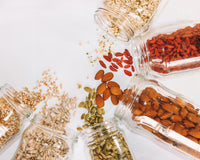
La protéine de pois est l'une des plus populaires. Fabriquée à partir de pois cassés jaunes, elle est naturellement faible en glucides, riche en protéines et facile à digérer, avec une saveur douce qui se marie bien dans les shakes. La protéine de chanvre provient des graines de chanvre et apporte des graisses saines et des fibres en plus de ses protéines, ce qui convient parfaitement à la nature plus riche en graisses du régime cétogène, bien qu'elle ait tendance à avoir un goût légèrement plus terreux. La protéine de graines de courge est un autre excellent choix, faible en glucides et riche en minéraux tels que le magnésium et le zinc. La protéine de graines de tournesol est une option plus récente qui est naturellement hypoallergénique et douce pour la digestion.
La protéine de riz brun mérite également d'être mentionnée. Seule, ce n'est pas une protéine complète, c'est pourquoi elle est souvent mélangée à de la protéine de pois pour couvrir tous les acides aminés essentiels. Un mélange de pois et de riz est une option polyvalente fiable et compatible avec le régime cétogène.
Celles à aborder avec prudence
Quelques protéines végétales sont à éviter dans le cadre d'un régime cétogène strict. La protéine de soja est de haute qualité et complète, mais certains produits sont mélangés à des glucides ajoutés, il faut donc vérifier attentivement l'étiquette. Tout ce qui est commercialisé comme substitut de repas ou gain de masse contient souvent des sucres ajoutés, de l'avoine ou d'autres glucides qui réduiront rapidement votre allocation quotidienne. Il en va de même pour les poudres aromatisées sucrées avec des sirops ou des sucres de fruits. En règle générale, plus la liste des ingrédients est courte et simple, mieux elle convient au régime cétogène.
Une protéine alimentaire complète à conserver
Les poudres sont pratiques, mais ce ne sont pas le seul moyen d'augmenter les protéines végétales dans un régime faible en glucides. Les graines de chanvre sont l'une des meilleures options d'aliments complets à garder dans le placard. Elles sont naturellement riches en protéines, faibles en glucides et riches en graisses saines, ce qui les rend naturellement adaptées au régime cétogène.
Nos graines de chanvre décortiquées biologiques ont une texture douce et un goût doux et noisetté, il est donc facile de les saupoudrer sur des salades, de les mélanger à du yaourt de coco ou de les incorporer à un shake pour un apport supplémentaire en protéines. Considérez-les comme un compagnon polyvalent de votre poudre de protéines plutôt que comme un substitut.
Comment utiliser la poudre de protéines végétales dans le régime cétogène
Tirer le meilleur parti d'une poudre de protéines faible en glucides est simple. Mélangez une mesure avec du lait végétal non sucré, une cuillère de beurre de noix et une poignée de glace pour un shake rassasiant qui correspond à vos macros. Incorporez-le à un porridge céto à base de graines plutôt que d'avoine, ou utilisez-le pour donner de la structure à des pâtisseries faibles en glucides comme des pancakes protéinés et des fat bombs. Un peu suffit, alors commencez par une portion par jour et voyez comment cela s'intègre à vos repas.
Trouver votre équilibre
Manger végétalien et céto en même temps est plus facile qu'il n'y paraît une fois que l'on sait quelles protéines choisir. Concentrez-vous sur les stars faibles en glucides, les protéines de pois, de chanvre, de graines de courge et de graines de tournesol, surveillez l'étiquette pour les sucres cachés, et appuyez-vous sur des aides alimentaires complètes comme les graines de chanvre pour compléter le tout. Avec la bonne poudre dans votre routine, vous pouvez atteindre vos objectifs de protéines, rester en cétose et garder chaque shake entièrement végétal.
Comme toujours, si vous avez un problème de santé ou si vous êtes nouveau dans le régime céto, il est conseillé de consulter un professionnel de la santé avant d'apporter des changements importants à votre alimentation.