
Le millet est l'un de ces aliments qui nourrissent les gens depuis des milliers d'années, mais qui passe encore inaperçu dans les cuisines britanniques. Il est naturellement sans gluten, doux pour l'estomac, rapide à cuisiner et véritablement polyvalent, se présentant sous forme de grains, de flocons et de farine. Si vous n'y avez jamais goûté, voici tout ce que vous devez savoir sur le millet, notamment ce qu'il est, pourquoi il est bon pour vous et comment utiliser chaque forme.
Qu'est-ce que le millet exactement ?
Le millet est une petite graine ronde, de couleur or pâle, récoltée à partir d'un type d'herbe. Comme le quinoa et le sarrasin, c'est techniquement une graine plutôt qu'une vraie céréale, ce qui explique en partie pourquoi il est naturellement sans gluten. Il a une saveur douce, légèrement noisettée et légèrement crémeuse qui se marie magnifiquement avec d'autres goûts, ce qui en fait un excellent point de départ pour quiconque découvre les grains alternatifs.
Le millet est-il bon pour la santé ?
Le millet a un profil nutritionnel vraiment utile. C'est une bonne source de fibres et il fournit des protéines végétales, ainsi que des minéraux, et il est particulièrement remarquable pour sa teneur en magnésium. Parce qu'il est naturellement sans gluten, c'est un aliment de base précieux pour toute personne atteinte de la maladie cœliaque ou d'une sensibilité au gluten, offrant une variété au-delà du riz et des pommes de terre habituels. En tant qu'aliment de type grain entier, il fournit également une énergie à libération lente, ce qui vous aide à vous sentir rassasié plus longtemps. Comme pour tout aliment unique, les avantages proviennent de son intégration dans une alimentation variée et équilibrée plutôt que de sa consommation exclusive.
Le grain de millet : l'ingrédient polyvalent passe-partout
Le grain de millet entier est la forme la plus polyvalente, et il cuit en environ 15 à 20 minutes. Mijoté dans de l'eau ou du bouillon, il fonctionne un peu comme le riz ou le couscous, comme base pour les salades, comme accompagnement pour les currys et les ragoûts, ou comme plat d'accompagnement à part entière. Cuit avec un peu plus de liquide et remué, il devient doux et crémeux, presque comme une polenta salée ou un porridge réconfortant. Notre grain de millet biologique est un aliment de base bon marché et nourrissant qui mérite une place régulière dans votre placard.
Les flocons de millet : parfaits pour le petit-déjeuner et la pâtisserie
Les flocons de millet sont des grains de millet roulés en fines lamelles, un peu comme l'avoine. Cela les rend idéaux pour un porridge sans gluten, seuls ou mélangés à d'autres flocons, et ils sont délicieux dans le granola maison, les flapjacks et les boules d'énergie. Vous pouvez également les incorporer à vos pâtisseries pour plus de texture et de bienfaits. Nos flocons de millet biologiques sont un moyen simple d'ajouter de la variété à vos petits-déjeuners.
Farine de millet : la pâtisserie sans gluten simplifiée
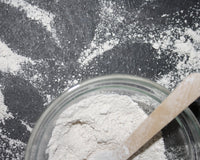
La farine de millet est moulue à partir de la graine entière en une farine fine et pâle, au goût doux, légèrement sucré et crémeux. C'est un ajout utile à la pâtisserie sans gluten, où elle apporte une mie douce et un goût délicat aux pains, crêpes, muffins et biscuits. Parce qu'elle est sans gluten, elle fonctionne mieux mélangée à d'autres farines sans gluten et à un liant plutôt que d'être utilisée entièrement seule pour les pâtisseries levées. Notre farine de millet biologique est un bon aliment de base à un prix raisonnable pour toute personne qui cuisine sans gluten.
Comment débuter avec le millet
La façon la plus simple est de remplacer le grain de millet par du riz dans un plat que vous préparez déjà, comme un curry, un ragoût ou une salade de céréales. Faire griller le grain sec dans la poêle pendant une minute avant d'ajouter le liquide fait ressortir sa saveur de noisette. À partir de là, essayez les flocons de millet pour le petit-déjeuner et la farine de millet dans vos pâtisseries, et vous constaterez rapidement que cette humble graine gagne une place permanente dans votre cuisine.
Le millet est un aliment abordable, naturellement sans gluten et véritablement polyvalent qui mérite bien plus d'attention qu'il n'en reçoit. Que vous utilisiez le grain comme alternative au riz, les flocons pour le petit-déjeuner ou la farine pour la pâtisserie, c'est un moyen facile et nutritif d'ajouter de la variété à vos repas. Essayez-le, et vous vous demanderez peut-être pourquoi vous l'avez ignoré si longtemps.